
Your Cart is Empty
Window furnishings ⌄
- ABOUT
- In Studio
- Gallery
- Contact Us
- Shop
- +612 9960 2844
- Login

A room can feel almost right and still be difficult to finish. The sofa may be staying, the floor might be a colour you would not choose today, and the curtains could need replacing before anything else. Looking at more photographs online can add possibilities without making the next decision clearer.
A visit to an interior design showroom in Mosman can help bring those choices together. You can look closely at materials, compare textures and discuss how the room needs to work. A little preparation makes that conversation more specific, whether you are considering one pair of curtains or a wider decorating project.
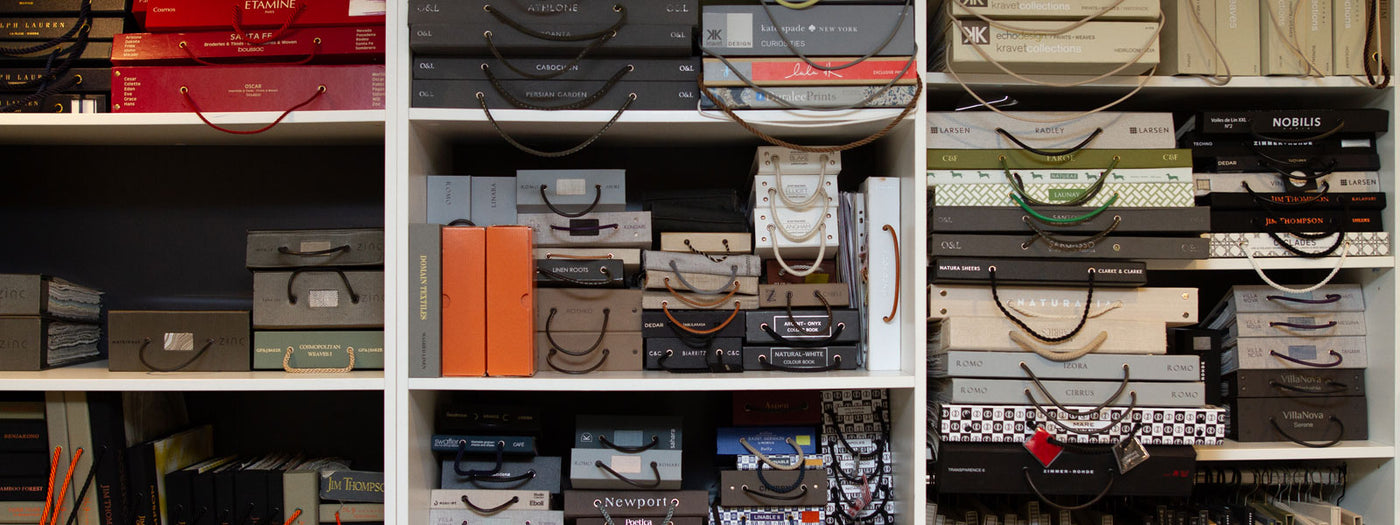
At Tempo's Mosman showroom, the fabric and wallpaper library sits alongside curtains, blinds, shutters, furniture, accessories and awnings. Our designers and decorators can help coordinate selections for your home. The most useful starting point is a clear picture of your space, the pieces you want to keep and the decisions you would like help making.
This guide explains what to prepare, what to ask while comparing samples and what should remain provisional until the practical details have been checked.
Before collecting inspiration, write a short description of the room as it works today. Who uses it? At what times? What is comfortable, and what causes frustration? A room used for family television most evenings has a different brief from a sitting room used mainly for reading in daylight.
Be specific about the problem. “The room needs warmth” could mean the colours feel cool, the lighting feels stark or the seating arrangement feels disconnected. “We need privacy” could mean neighbours can see in during the day, or that the room feels exposed after dark. Those are useful distinctions to bring into a conversation.
Choose one or two priorities rather than expecting every decision to carry equal weight. You might want to keep an existing sofa, make a window easier to use and introduce some pattern. That is enough to begin. A complete style vocabulary or a finished mood board is not required.
Make three simple lists: keeping, considering and undecided. Include the obvious furniture, but also flooring, joinery, rugs, artwork, light fittings and window treatments. Mark anything that is already ordered, because an incoming piece can be as important as one already in the room.
This avoids building a scheme around a temporary item by mistake. It also helps identify which decision should come first. If a much-loved patterned rug is staying, bring it into the discussion early. If the rug is likely to be replaced, explain that before using its colours to narrow every other selection.
Sentimental pieces deserve a place in the brief too. Explain why a chair, cabinet or painting matters, even if it does not resemble your inspiration photographs. A useful plan should accommodate the things you value rather than quietly assume they will disappear.
Bring a small set of clear photographs showing each wall, the main window, the view into adjoining spaces and the furniture you are keeping. Take an additional photograph from the position where you normally sit. It can reveal a relationship between the window, artwork and joinery that a straight-on photograph misses.
For window discussions, include the area above and beside the opening, the floor below it and any nearby doors, switches or furniture. A close-up of the existing track or blind can be useful, but it should accompany a wider view. Avoid using a wide-angle image as evidence of exact proportions.
Photographs help explain the space; they are not dependable colour references. Phone settings, exposure and room lighting can change how materials appear. When a particular colour match matters, bring a real sample if you have one. Remove or crop personal documents and anything else you do not need to share.
A fabric can look appealing on its own and less convincing beside the floor or joinery at home. Small samples of finishes you are keeping can help make the showroom comparison more relevant. Useful examples include a spare tile, a labelled paint swatch or a flooring offcut that is safe and practical to carry.
Do not dismantle fittings or remove fragile materials just to bring them in. Photographs and product references are a sensible starting point when a physical sample is unavailable. Note the product name and colour where known, and mark anything you are unsure about rather than guessing.
Keep the sample set manageable. Focus on the finishes that occupy the most visual space or cannot easily change. The aim is to see relationships between materials, not to carry every object from the room. A small collection with clear labels is more useful than a bag of unidentified offcuts.
Choose a few images and note what you like about each one. Perhaps it is the relaxed fall of the curtains, the balance of plain and patterned surfaces, or the way an armchair sits with an older timber table. A photograph can be useful even when you dislike most of the room shown.
Include one or two examples of what you do not want. “Too formal”, “too many small patterns” or “not enough contrast” can be easier to recognise than a named decorating style. These observations help make preferences understandable without turning the meeting into a test of design terminology.
Treat inspiration as a direction rather than an exact shopping list. Different window proportions, ceiling heights and existing finishes will change how an idea works in your home. For a broader scheme, our interior design and decoration service is a useful starting point for discussing how the individual selections relate.
If you have a floor plan, bring it and identify any changes made since it was drawn. Otherwise, a simple sketch with approximate room dimensions can help explain the layout. Note the main furniture sizes and show the positions of doors and windows. Write the units beside the numbers.
For a window, record what you have measured: the glass, the frame, the recess or the existing curtain track. Those measurements are not interchangeable. A number without that explanation can create more uncertainty than a photograph. Label your own measurements as preliminary rather than presenting them as ready for manufacture.
Ask what needs a professional check measure before an order can proceed. Access, fixing surfaces, clearances and the proposed treatment can affect the final specification. The curtains and blinds options are worth exploring beforehand, but a showroom discussion should not be mistaken for confirmation that a particular system fits your window.
A budget conversation is most useful when it includes what the amount needs to cover. Does it include only the fabric and making, or also hardware, installation and other room changes? Are you refreshing one room now, with another planned later? State the intended scope even if your budget is still a range.
It is also helpful to distinguish a comfortable budget from a firm ceiling. If you have not established either, ask which choices are likely to have the greatest effect on the eventual quote. That gives you a more useful basis for comparison than judging samples solely by their appearance.
Share any important dates, but distinguish a preferred completion date from a fixed commitment. A family visit, move or renovation handover may affect your priorities. Availability and lead times need to be checked for the actual selections; choosing a sample does not establish a delivery or installation date.

Once you begin looking at materials, it is easy for the table to fill with attractive but unrelated choices. Try organising the options into two or three small groups. Each group should answer the same brief, so you can compare directions rather than isolated favourites.
For example, one group might use a quiet curtain with a more expressive cushion fabric. Another might introduce pattern at the window and keep the upholstery simpler. These are hypothetical approaches, not rules or descriptions of a Tempo project. Their value is that each gives the materials a role.
Stand back as well as looking closely. Ask which element you want to notice first and which should provide a background. You do not need every material to make a statement. If the room already has a strong view, artwork or patterned rug, the surrounding choices may need a different balance from an otherwise plain room.
Colour is only one part of a sample comparison. Look at texture, pattern scale and how the material behaves when it is moved. Ask whether a larger sample, hanging display or additional product image is available when the small swatch cannot show the full effect.
For curtains, discuss the intended look when open and closed, not simply the fabric colour. For upholstery, explain how frequently the piece is used and ask about suitability and care for that application. A material being displayed in a library does not mean it is suitable for every purpose.
Keep questions tied to the actual product. Ask what its care instructions say, what limitations matter in your room and which details need confirmation. If you have children, pets or a particularly sunny position, describe the practical demands without expecting any fabric to be immune to wear, stains or fading.
A small cutting may show a colour and texture without showing the whole pattern. Ask to see the repeat or a larger representation when placement matters. Likewise, a photograph of a finished room may help explain an idea without proving that the same effect will be achieved at your window.
Do not assume that colours on different materials will match simply because their names sound similar. A warm white paint, a natural-coloured textile and a pale timber can relate well without being identical. The question is whether the combination works in the room, not whether every label uses the same description.
Record what still needs checking. That might be a larger sample, a suitable lining, a confirmed colour reference or the availability of a particular material. Keeping those questions visible is more useful than allowing a promising option to become an assumed final selection.
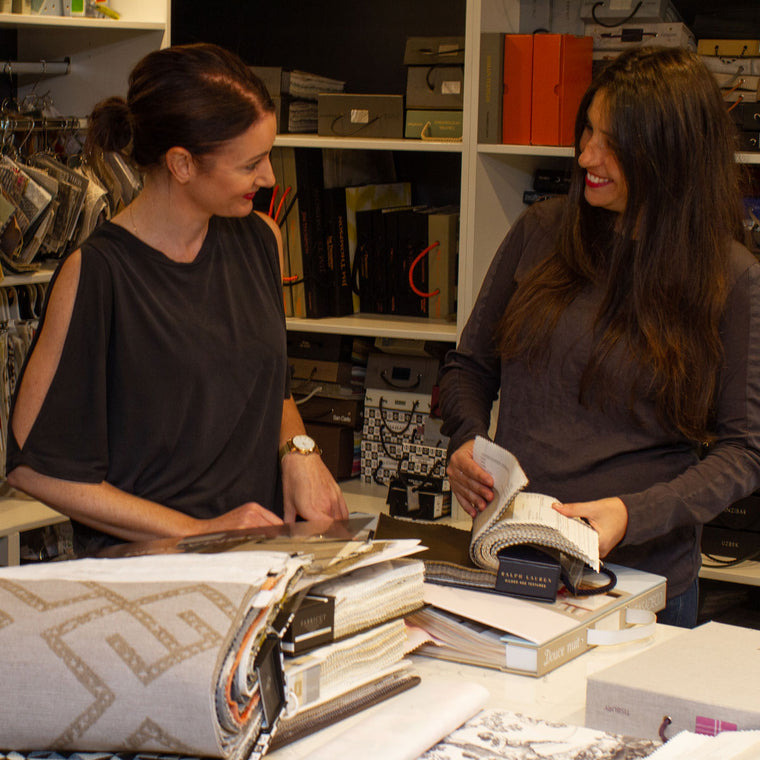
Before leaving, ask which sample options are available for your shortlist and whether any charge, return date or other condition applies. Do not assume every display book can be borrowed or that every material has a loose sample. Arrangements can depend on the product and supplier.
Where samples are available, view them in the intended room alongside the finishes and furniture that are staying. Look during the day and under the lights you normally use in the evening. Place a wall-related sample vertically and consider it from normal viewing distance as well as close up.
For paint, use the manufacturer's recommended sample process rather than relying on a screen image. Dulux's colour guidance specifically recommends testing a selection at home. The same practical caution applies to making a textile decision from a photograph alone: use the image to remember the option, then assess the physical material where possible.
Write down the supplier, collection, design and colour reference for each shortlisted option. With permission, photograph the sample together with its identifying label. Give the room or item a clear name so that “the pale fabric” does not later refer to several different possibilities.
Add a short reason for each choice. “Works with the existing rug” or “preferred texture, colour still to check” is more useful a week later than a photograph on its own. Separate favourites from approved selections, particularly if more than one person is involved in the decision.
Before anything is ordered, check that the written quote or specification reflects the intended product, colour, room and scope. Ask about any unclear inclusions, exclusions or outstanding measurements. A good showroom visit can produce a shortlist and a clear next step without requiring every decision to be settled that day.
Imagine a living room with a sofa and timber cabinet that will stay, curtains that need replacing and a rug that might change later. The immediate priority is privacy in the evening. The preferred look is relaxed, but the owner is not sure whether to introduce colour at the window or through smaller pieces.
For that visit, useful preparation would be room photographs, the sofa's fabric reference if available, a photograph of the cabinet in daylight and preliminary window dimensions. The owner would explain that the rug is undecided, so it should not automatically determine the curtain selection.
The discussion could then focus on the window's practical needs and two possible colour directions. Smaller accessories could follow once the main treatment is resolved. This is an illustrative planning example only, not a completed client project, product recommendation or promise about a particular outcome.
Before your appointment, gather:
You do not need every item on the list to start a conversation. If you are unsure what would be useful for your particular project, explain the brief when arranging your visit. That is especially worthwhile before bringing a large item, several sample books or a complicated set of plans.
Tempo Interiors is at 52 Ourimbah Road, Mosman. Our showroom brings together a fabric and wallpaper library with a range of interior and window-treatment selections, giving you a place to discuss materials in the context of your home.
Whether you are beginning with one room or considering a more connected decorating scheme, bring what you know and identify what remains undecided. The aim is to leave with a clearer direction, an understanding of the checks still required and an agreed next step.
Contact Tempo Interiors to arrange a showroom visit and tell us a little about your project. Please confirm the appointment arrangements when booking.

SHIPPING
At Tempo Interiors we offer two different types of delivery, determined by the products in your order to ensure a great delivery experience.
We use specialist furniture removalist companies for all larger furniture items. Homewares and accessories are sent by Fastway carrier, rugs are sent by Startrack. Please note that multiple product orders are charged according to the product with the highest delivery type.
HOW DOES THE DELIVERY PROCESS WORK FOR FURNITURE?
Once items are dispatched, our allocated Transport Company for your area will contact the preferred delivery contact provided via phone or text to arrange delivery. Upon approach the transport company will make contact approximately half an hour ahead of delivery taking place to ensure both parties are prepared. Once on location the delivery will take place.
Our Transport Companies will perform a white glove service on delivery. White glove entails a full unpack, assemble, product placement and rubbish removal. All steps are taken with care and pride to ensure that any damages are avoided. Please inspect all deliveries before signing to accept the order.
HOW DOES DELIVERY PROCESS WORK FOR HOMEWARES?
Once dispatched from our supplier the carrier will deliver your order to your specified delivery address during business hours and orders must be signed for. Please ensure your delivery address is available during business hours.
HOW LONG FROM PLACEMENT OF ORDER ARE GOODS PICKED AND DISPATCHED?
Once the order has been paid, confirmed and processed We will pick and pack items within 48 hours of placement of order.
Orders are dispatched depending on the location.
CAN I PICK UP FROM The WAREHOUSE?
Yes, if you prefer to pick up items, please ensure to make prior arrangements with either the warehouse or your sales consultant.
WHAT IS ‘WHITE GLOVE’ DELIVERY?
All furniture orders come with our premium white glove service which includes full unpack of your goods, assembly, product placement and rubbish removal.
FREE FREIGHT
Tempo Interiors offer free freight on orders (metro deliveries) of $5,000 and above and capped freight at $170 on orders below $5,000 This is inclusive of GST. Metro covers deliveries to all suburbs within a 30 Kilometer radius of Brisbane, Sydney and Melbourne cities. All deliveries outside the metro area require a quote from Tempo Interiors.
HOW IS FREIGHT CALCULATED?
Freight is determined on several different aspects, these include size, location and frangibility. It is important to remember that freight is quoted based on ground level access, Deliveries into high rise units or access via stairs and lifts are considered an additional service and may incur further charges that will alter the freight quote.
TO AVOID ANY ADDITIONAL CHARGES, IT IS IMPORTANT TO ASK YOURSELF THE FOLLOWING QUESTIONS:
WHAT TO DO WHEN THE TRANSPORT COMPANY ARRIVES?
It’s very important that once the product has arrived that you thoroughly check items prior to signing for it. Any damages that may be found need to be reported on the spot and the transport company will return order for Tempo Interiors to revise.
During the quality control process the warehouse team insert a card into every box, that card will provide all necessary steps to undertake if stock arrives damage.
Please note all items must be personally inspected upon unpacking, as once the delivery is signed for claim of damage and faults may not be accepted by the carrier.
WHAT HAPPENS IF DELIVERY DOESN'T ARRIVE?
In the rare event that your delivery doesn’t arrive please contact Customer Care on 02 9960 2844, they will then track down order and resolve accordingly.
WHAT HAPPENS IF MY PRODUCT ARRIVES BROKEN?
During the quality control process the warehouse team insert a card into every box, that card will provide all necessary steps to undertake if stock arrives damage.
Please note all items must be personally inspected upon unpacking, as once the delivery is signed for claim of damage and faults may not be accepted by the carrier.
Please contact Customer Care on 02 9960 2844 for all further information.
DELIVERY TIMELINES
FURNITURE | Hunter & Co & Aussie Home Removals
Sydney Metro 2 Weeks
FURNITURE | INBOX
Melbourne Metro 2-3 Weeks
FURNITURE | Swift or DJ Lindsay
Brisbane & Gold Coast Metro 1-2 Weeks
FURNITURE | Anything and everything
Sunshine Coast Region 1-2 Weeks
FURNITURE | Pedemonts Transport
Adelaide Metro 3+ Weeks
Perth Metro 4+ Weeks
Please Note: All Regional areas require a Quote for all carriers. Contact your sales consultant for more information.
HOMEWARES | Partner Carrier Fastway or Startrack
Brisbane 1-3 Business Days
Sydney 1-4 Business Days
Melbourne 3-5 Business Days
Adelaide 3-6 Business Days
Perth 4-7 Business Days