
Your Cart is Empty
Window furnishings ⌄
- ABOUT
- In Studio
- Gallery
- Contact Us
- +612 9960 2844
- Login




A cushion can make a favourite chair more inviting, introduce a colour from an artwork or bring a bedroom scheme together. It can also take up the best part of a seat, feel harder than expected or look quite different from the small fabric sample that prompted the order.
Choosing custom cushions in Sydney starts with a practical question: what do you want them to do? Decide that before collecting patterns. A decorative cushion for an occasional chair, a cushion you lean against every evening and a pair for a bed may need different proportions, fillings and finishes.
This guide focuses on indoor scatter cushions rather than replacement sofa seats or outdoor cushions. It explains how to develop a useful brief, compare options and avoid ordering more than your room needs. Tempo's soft furnishings service brings cushion sizes, fabrics, piping and trims into the wider room discussion, with making options and availability confirmed for your brief.
Before choosing a size, look at the usable space. The overall width of a sofa includes its arms; the space between those arms is what matters when you sit down. A deep, low-backed sofa and a small upright armchair can need quite different cushions even when their upholstery colours are identical.
Record the width between the arms, the seat depth and the visible height of the back. Take a photograph from directly in front and another showing the whole room. These measurements provide context for a discussion; they are not a final manufacturing specification.
Use cushions you already own to test proportions. Fold a spare cover or towel to approximate a smaller shape, or place a paper outline against the back to judge its footprint. A flat outline will not show the depth of a filled cushion, so finish by testing something with volume. Sit down in your usual position and notice whether you still have room to move.
For example, a 50 cm square and a 40 by 60 cm rectangle can occupy a similar amount of visual space but support the body differently. These are comparison examples, not recommended sizes for every sofa. The rectangular shape may leave more of a chair back visible, while the square may feel better on a deeper seat.
There is no compulsory number. Start with the people who use the sofa, rather than an odd-number styling rule. If two people regularly sit at opposite ends, test the arrangement with both seats occupied. If someone stretches out along the sofa, check where the spare cushions will go.
A useful test is to remove every decorative cushion, then return them one at a time. Keep each one only if it contributes something you want: comfort, colour, a different shape or a connection to another part of the room. Stop before the arrangement requires a nightly pile on the floor.
Symmetry can suit a formal seating arrangement, while an uneven grouping can feel more relaxed. Neither approach makes a room inherently better. An armchair may need one cushion or none. A long sofa may look balanced with a restrained arrangement if the upholstery, artwork or curtains already provide interest.
Photograph two arrangements from the doorway and compare them after using the room for a day. The more comfortable option deserves serious consideration, even if it contains fewer cushions than the inspiration photograph. A room should work with people in it as well as without them.
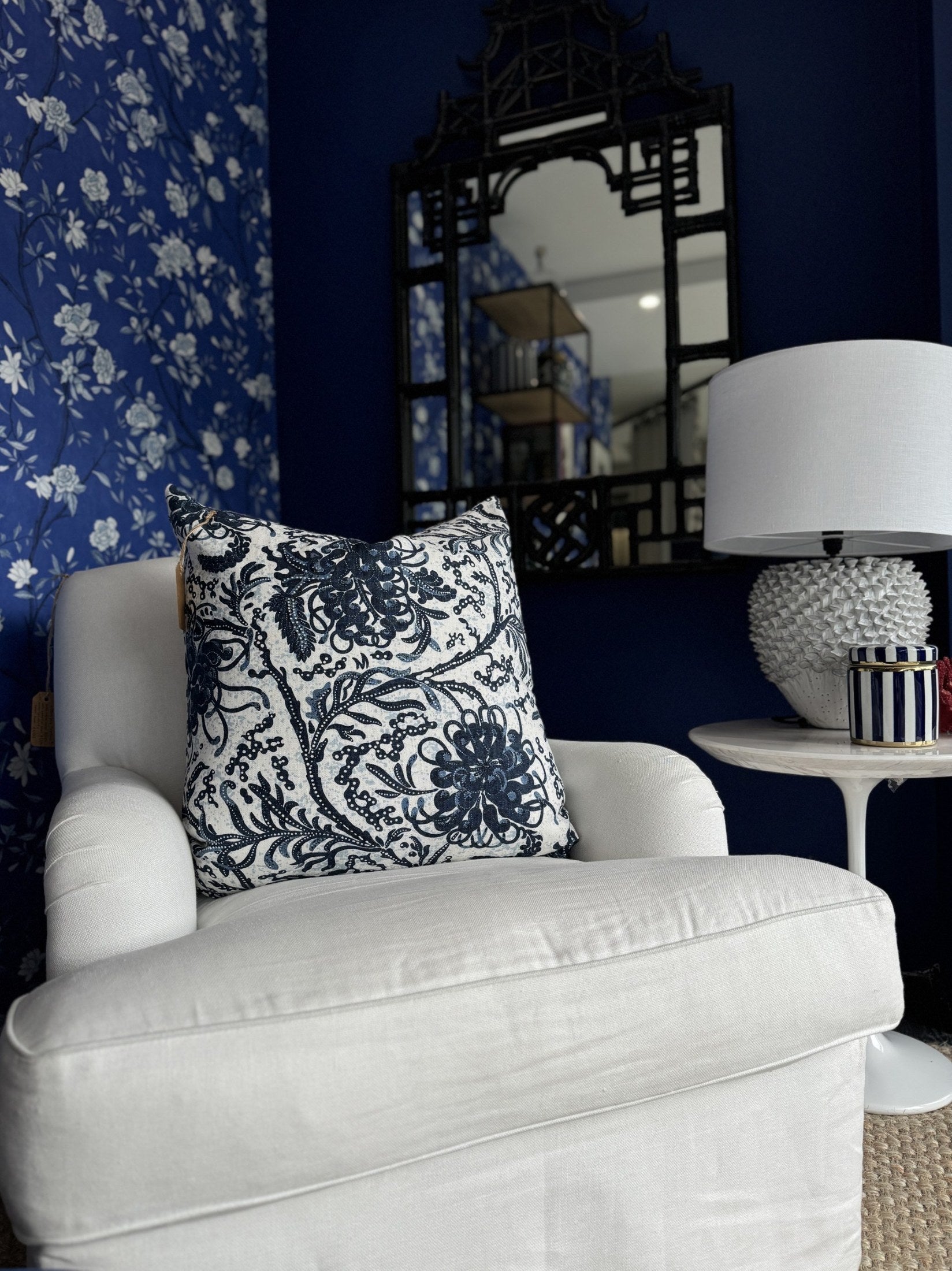

The insert influences how a cushion feels, how full it looks and how much attention it needs. A cover alone cannot tell you whether the finished cushion will be comfortable. Ask to compare suitable filling options and discuss whether you prefer a soft, yielding feel or a more resilient shape.
Feather-containing fillings commonly need regular reshaping. Fibre fillings vary in construction and firmness, so the word 'fibre' does not describe one consistent feel. A tightly filled cushion may look neat but push you forward on a shallow seat. A softer cushion can settle more readily but may not hold the outline you expected.
Avoid applying a blanket rule that every insert should be a set amount larger than its cover. The appropriate relationship depends on the filling, cover fabric, shape and intended fullness. Excess filling can strain seams or distort a pattern; too little can leave the corners looking empty. Ask the maker to specify the cover and insert as a compatible pair.
If you want to reuse existing inserts, bring one or provide its label, measurements and condition. Explain whether you like its current feel. Keep filling preferences, sensitivities and care expectations in the brief, without assuming a natural or synthetic filling automatically suits every household. Confirm the particular product details before ordering.
Lay out the colours already present in the room: upholstery, curtains, rug, flooring, artwork and painted surfaces. Choose which of these should guide the cushions. You do not need to repeat every colour or make every fabric match.
One practical approach is to select a starting fabric, then compare quieter companions beside it. A patterned cushion might borrow a background colour from the sofa and an accent from a painting. A plain cushion can give a busy wallpaper some breathing space. Texture may provide enough interest when you prefer a limited palette.
Keep the actual sofa fabric or a reliable sample beside the options. A blue that looks crisp on its own can appear grey or purple next to another blue. Photographs help explain the room but screens and lighting can shift colour, so use physical samples for the final comparison where possible.
If you are deciding on several elements at once, interior design and decoration can help establish priorities across the scheme. That may mean keeping the cushions quiet while a rug leads, or using them to connect pieces that previously felt unrelated.
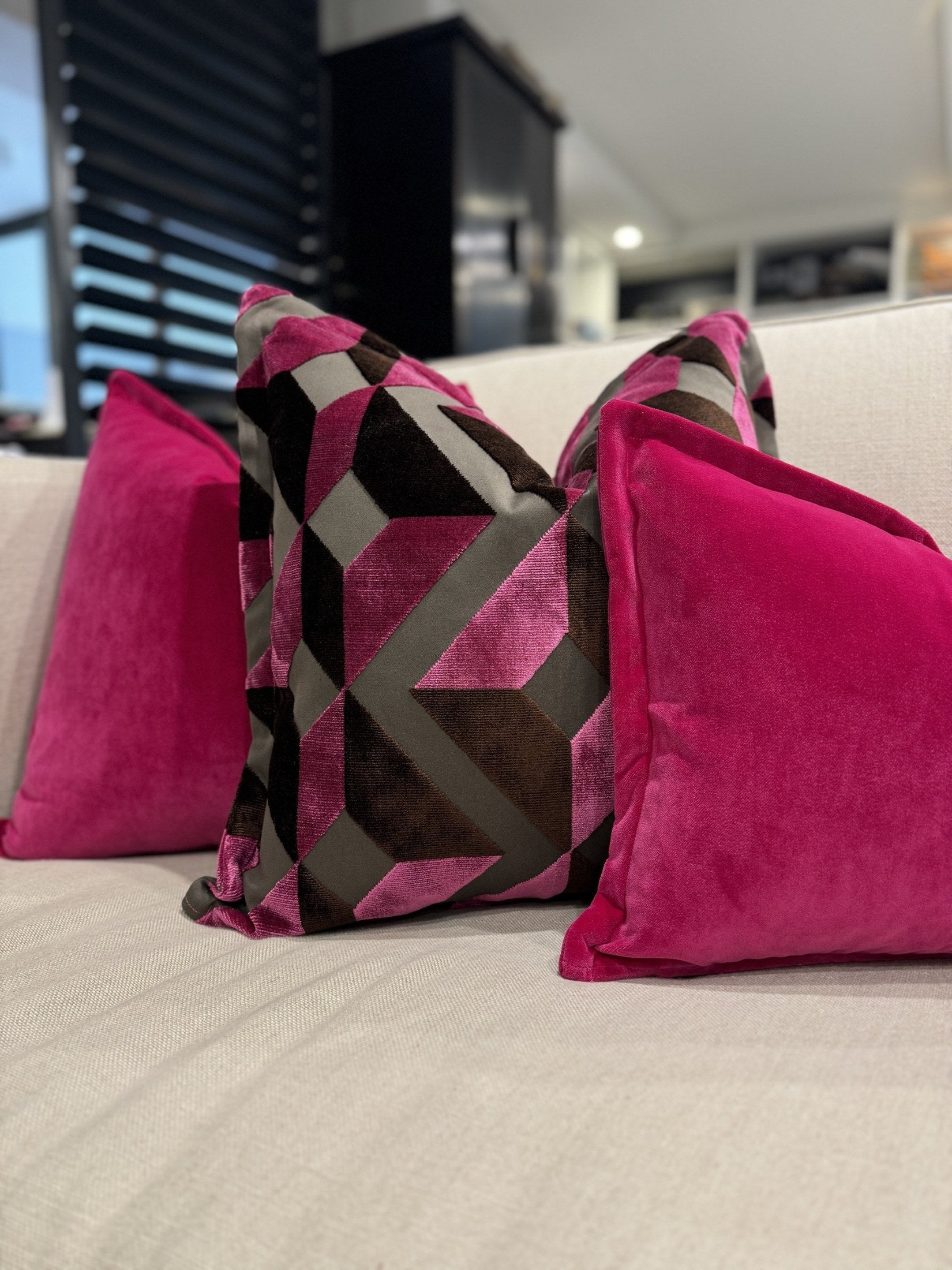
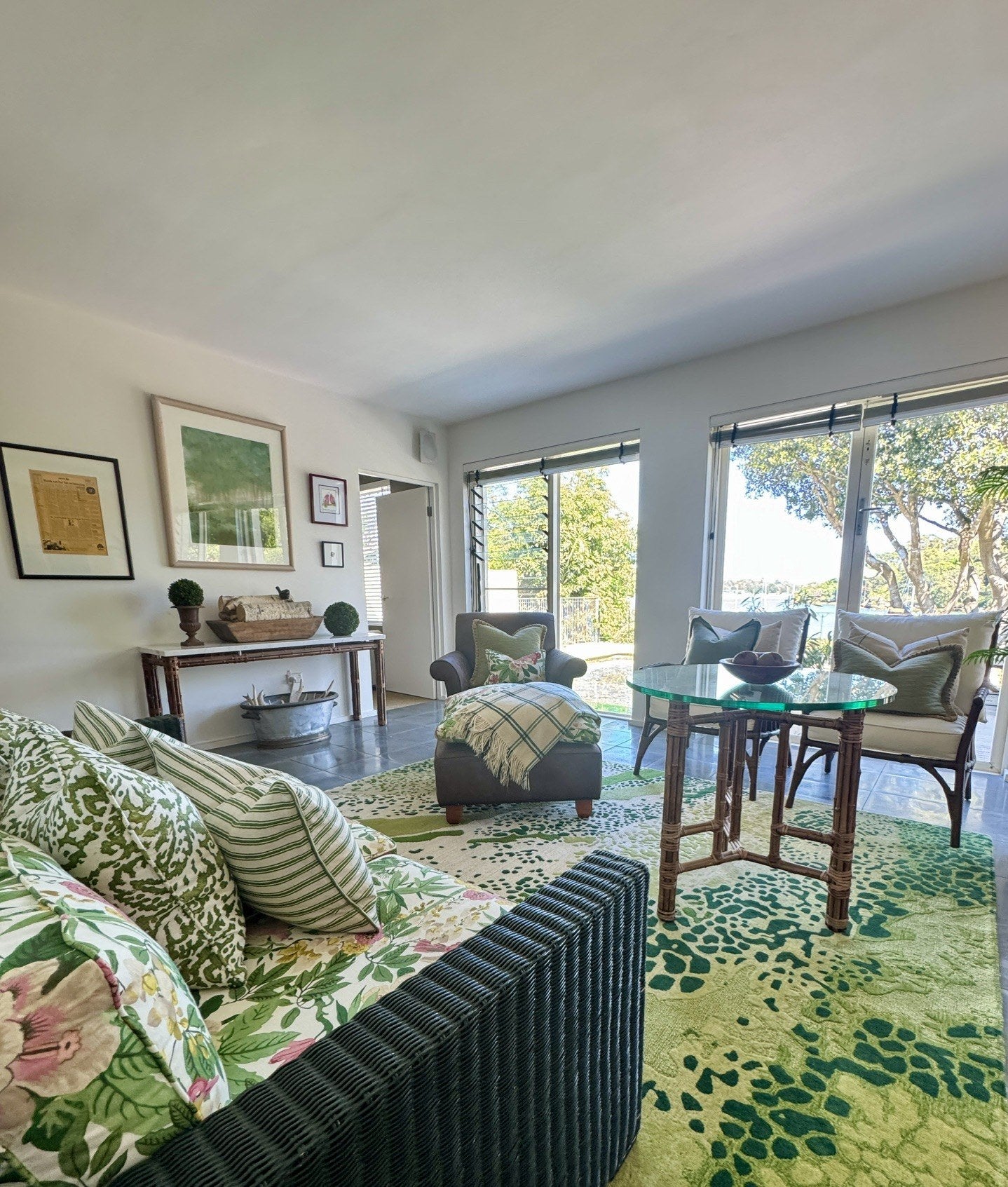
A small swatch can tell you about colour and texture without showing how a complete design will sit on a cushion. Ask to see enough fabric to understand the repeat. Large flowers, sweeping leaves or a broad stripe may change substantially when cut into a smaller panel.
Discuss which part of the design should appear on the front, whether two cushions should match, and what you expect on the reverse. Matching a particular motif or aligning a stripe can affect the amount of fabric required. Two cushions cut from the same cloth need not look identical unless that detail is specified.
When combining patterns, compare their scale and visual weight. Several equally bold patterns can compete even when their colours agree. Try a larger motif with a smaller geometric or a plain textured fabric, then stand back far enough to see the whole arrangement. This is an experiment, not a formula you must follow.
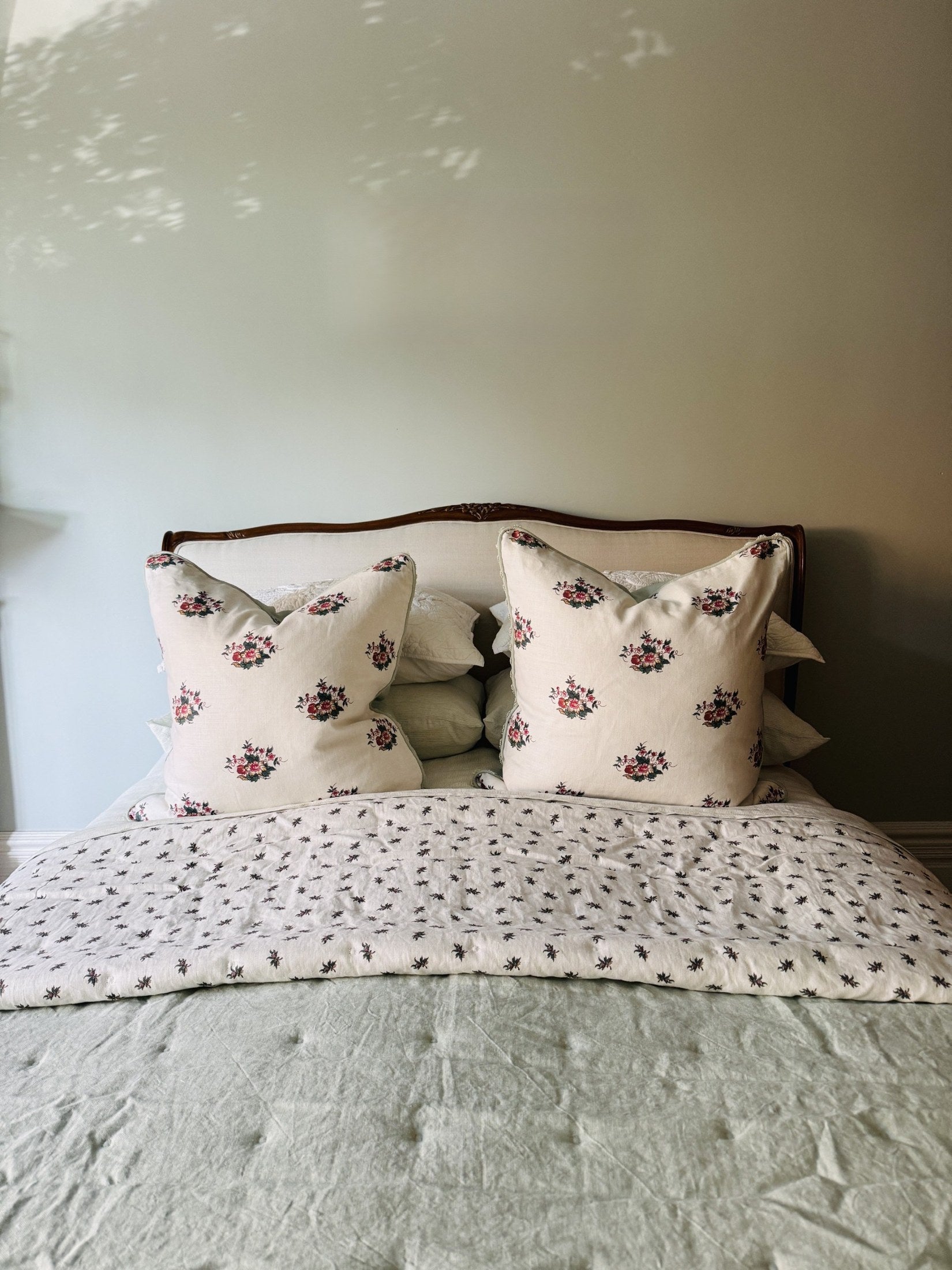
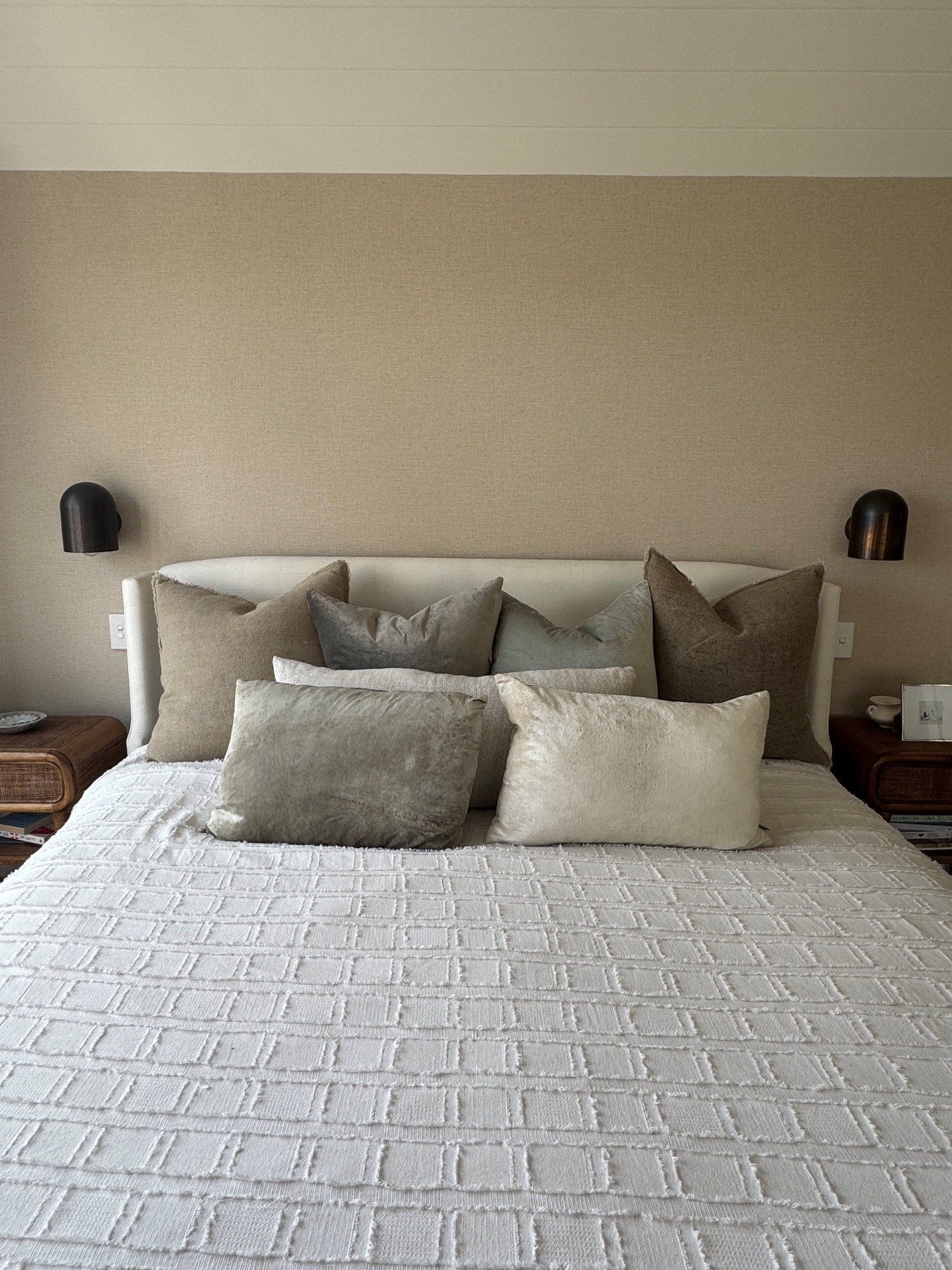
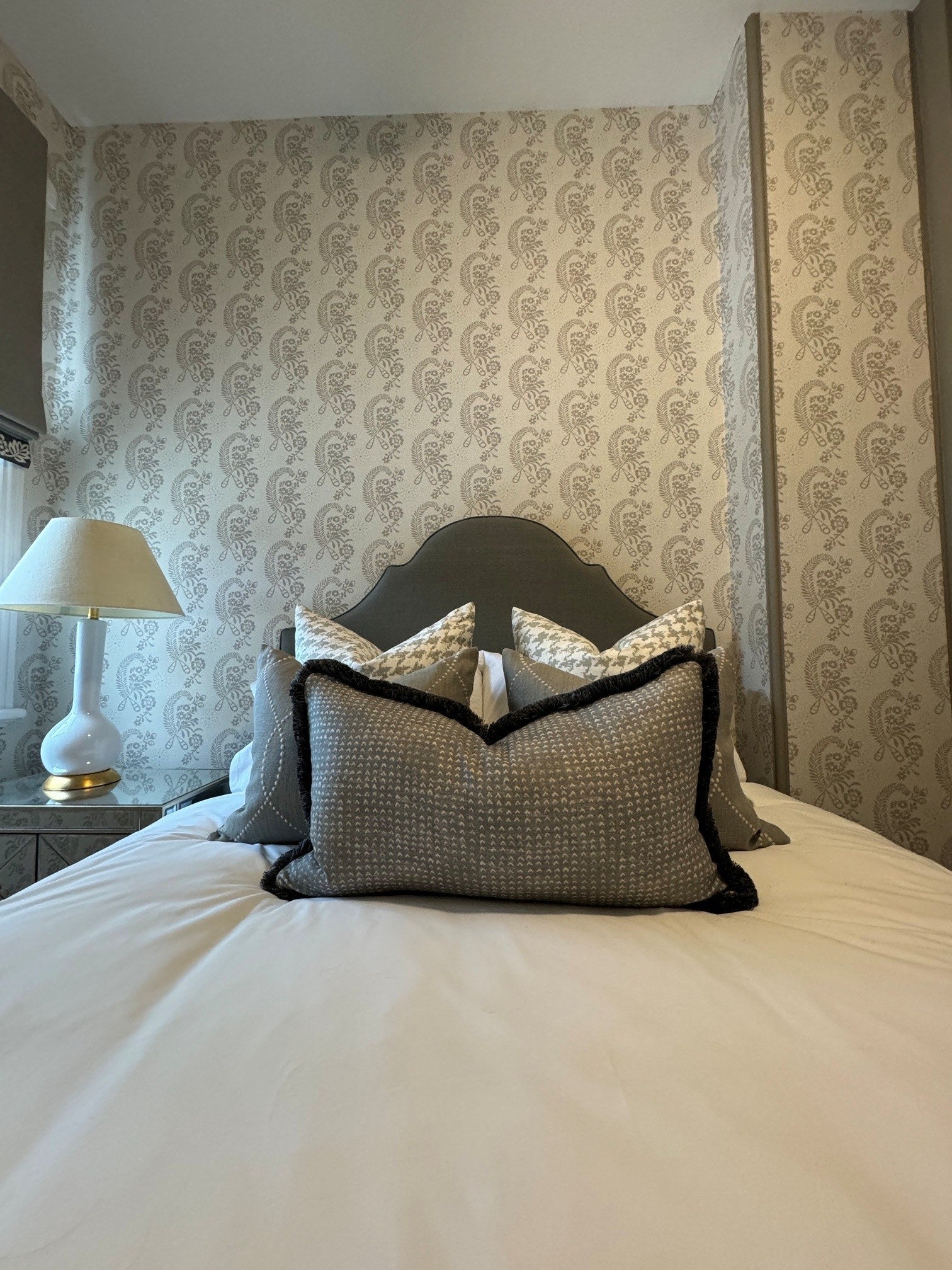
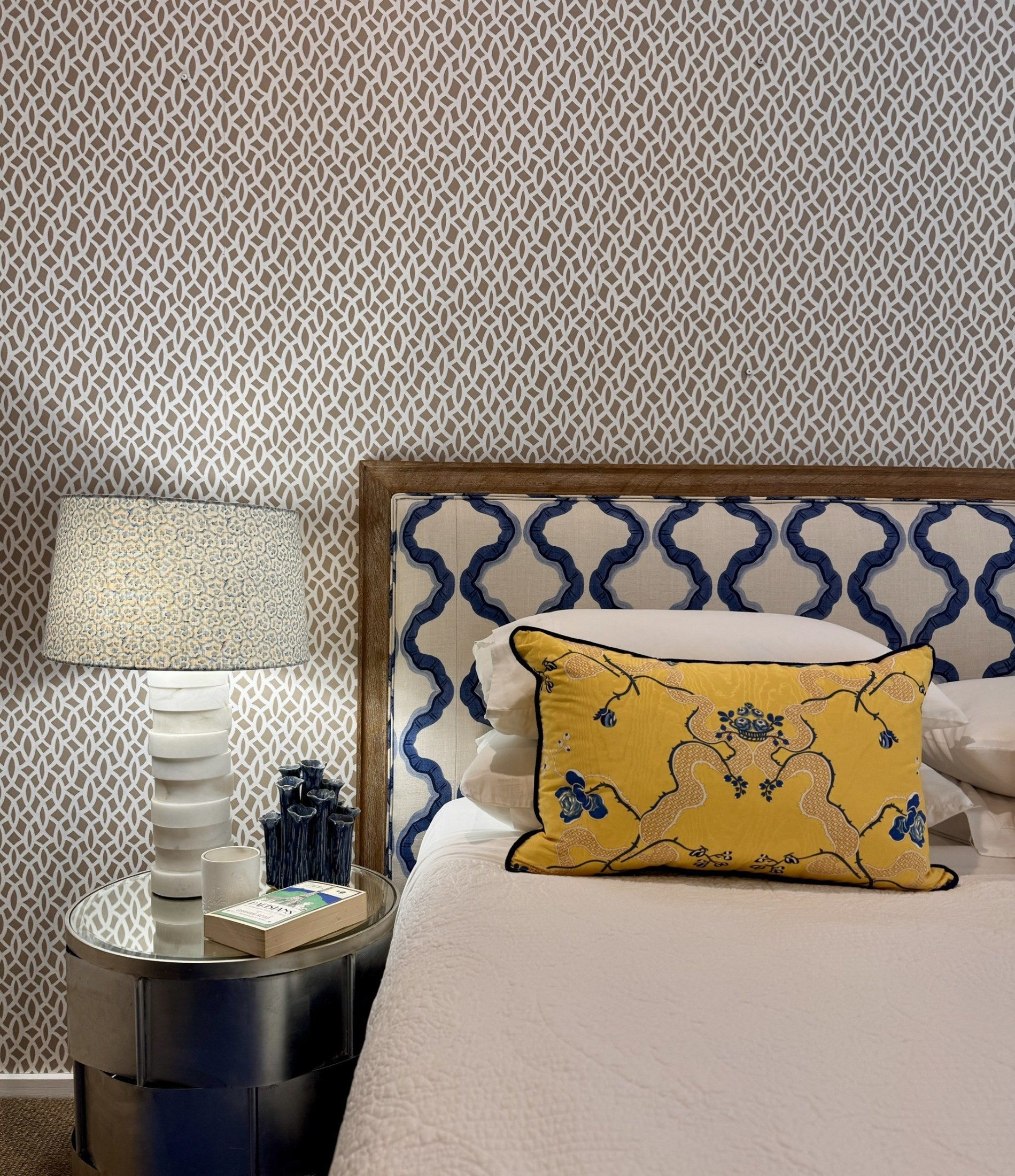
The bedroom photograph illustrates how several patterns can sit together while different cushion shapes remain visible. Use it to discuss scale and placement, not as a shopping list: the photograph does not establish current fabric availability or the specification suitable for your room.
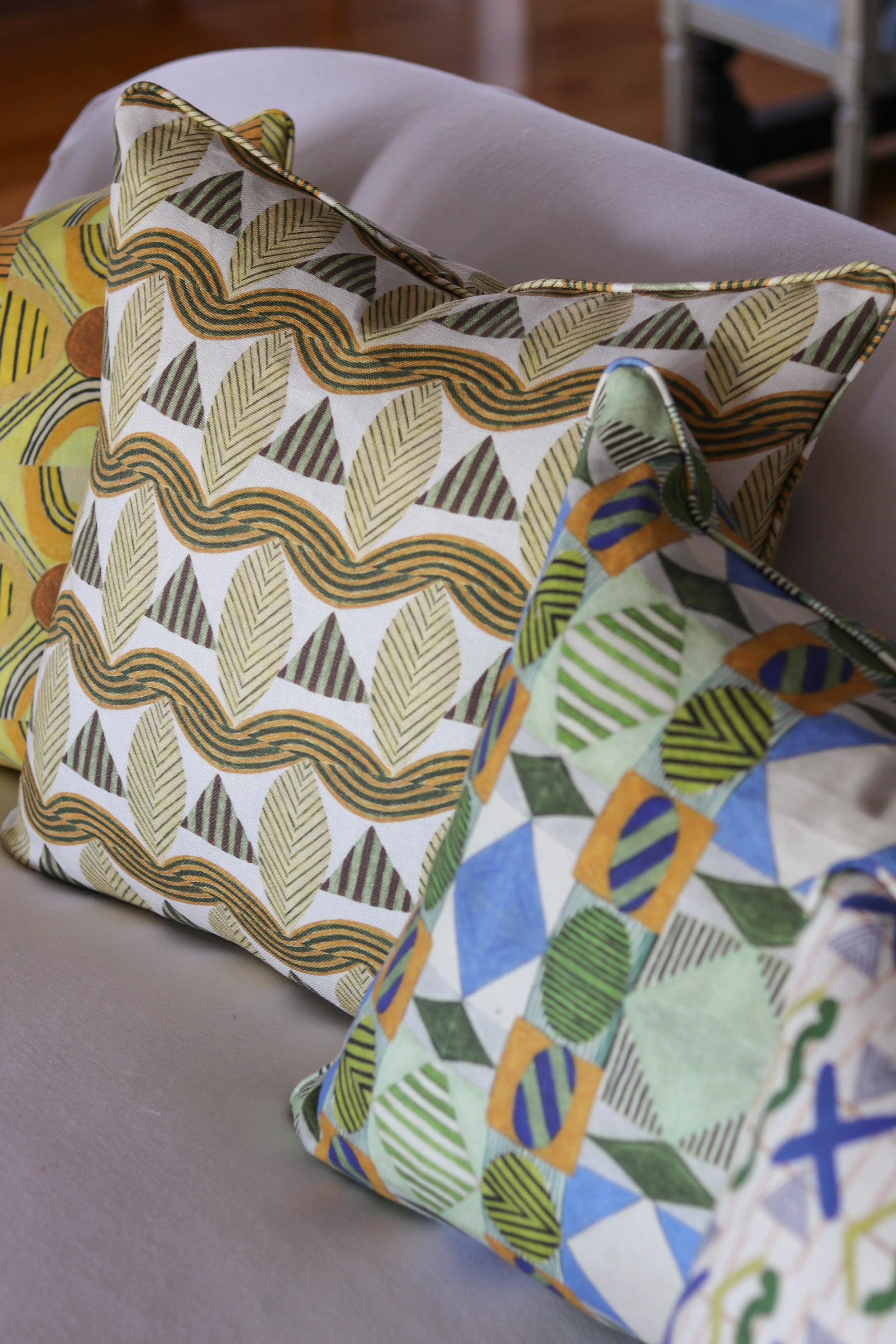
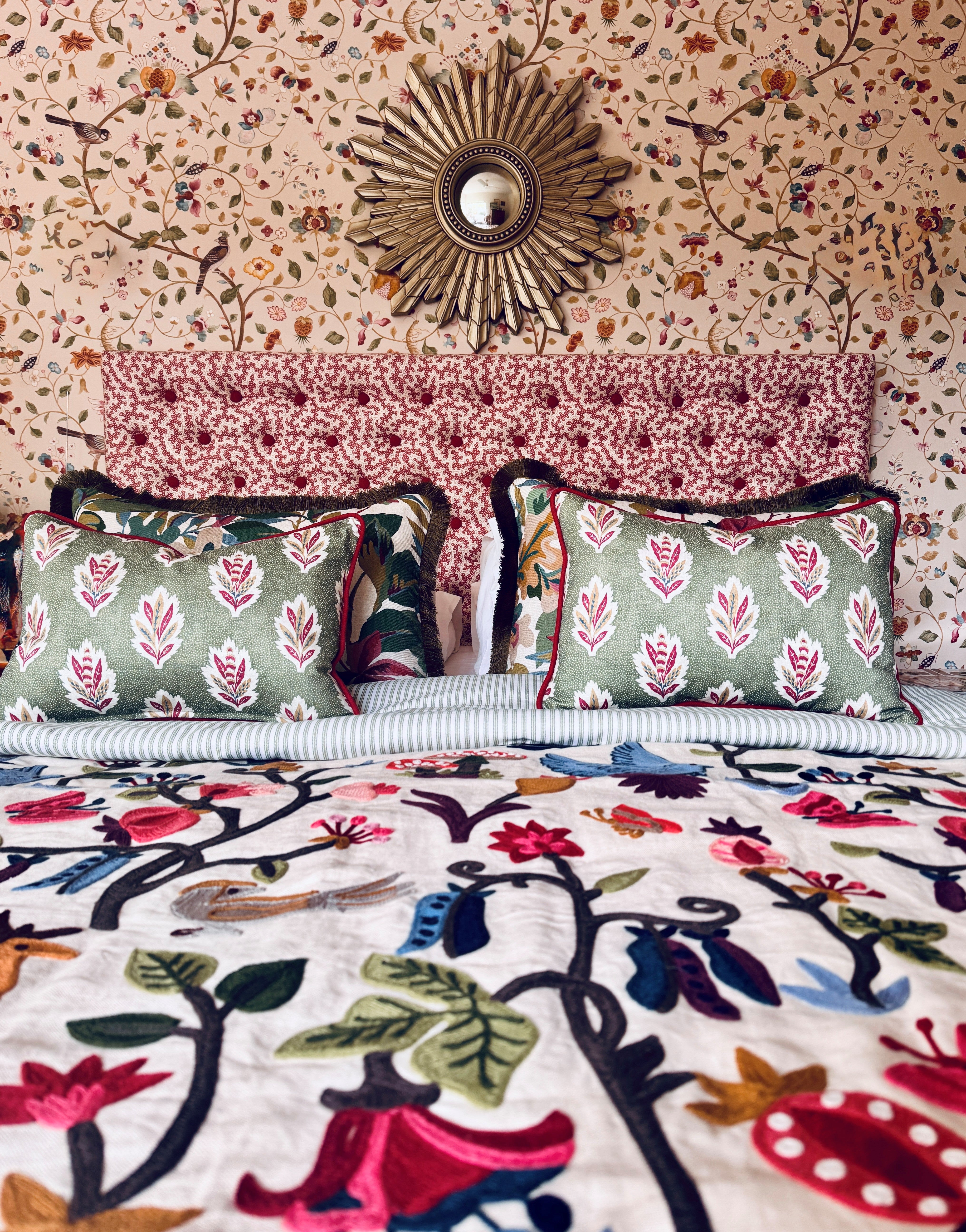
The edge of a cushion can change its character. Self-piping creates an outline using the main fabric; contrast piping introduces another colour. A flange, braid or fringe adds a different kind of detail. Ask which finishes suit the chosen cloth and how they affect the quotation.
A trim should also suit the way the cushion is handled. Long tassels may be appealing on an occasional chair but less practical where cushions are frequently moved, played with or brushed past by pets. Consider whether an edge will feel comfortable against an arm or cheek, not just whether it looks good in a photograph.
Specify the reverse rather than leaving it to assumption. Using the same fabric on both sides gives you a consistent appearance when the cushion turns over. A different reverse may be useful within the scheme, but its colour, texture and care requirements should work with the front.
Ask where the opening will sit and whether the cover can be removed without forcing the insert through a small gap. Removability is useful, but a zip does not mean the assembled cover can be machine washed. Fabric, trim, lining and construction all matter.
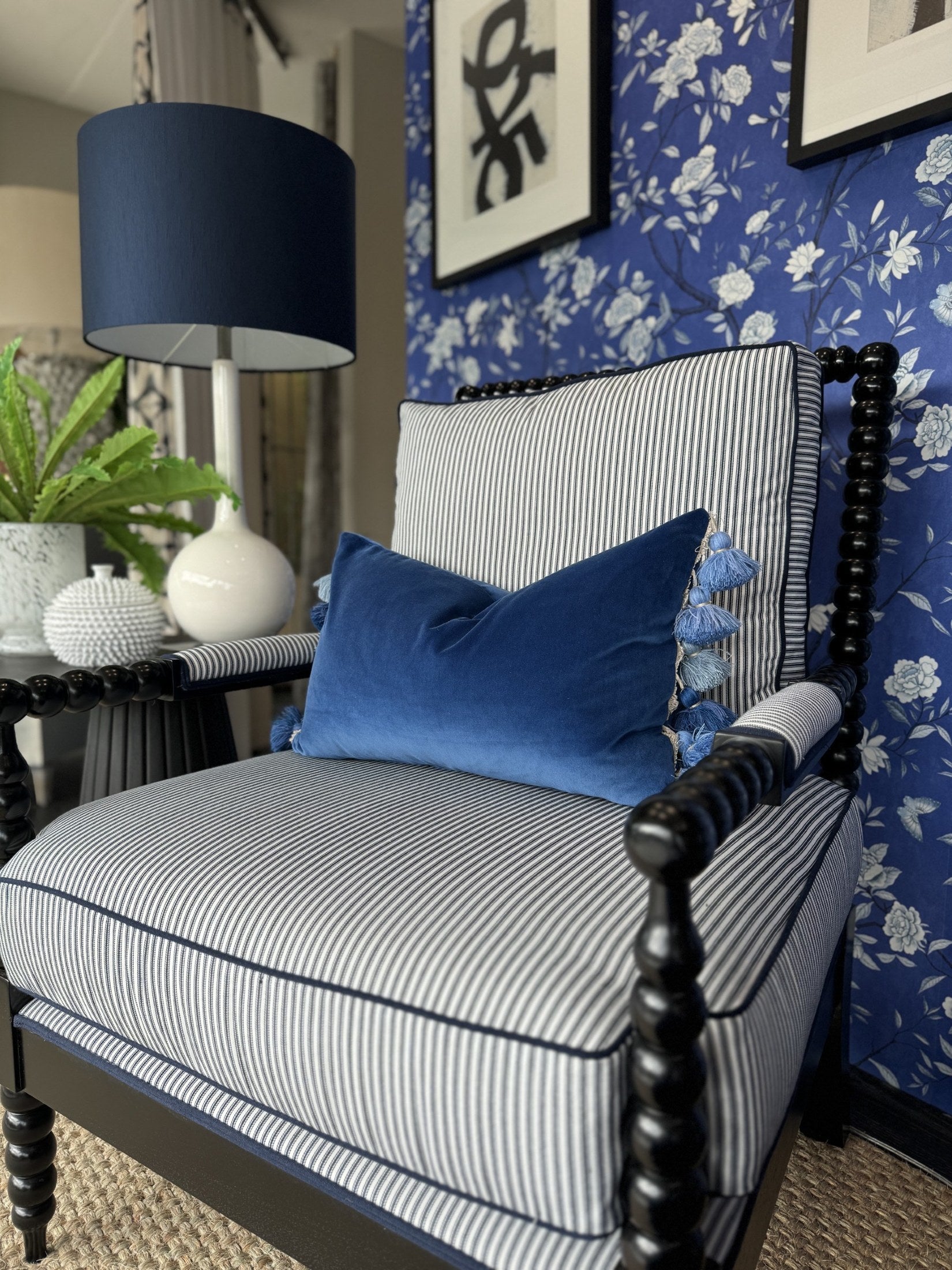
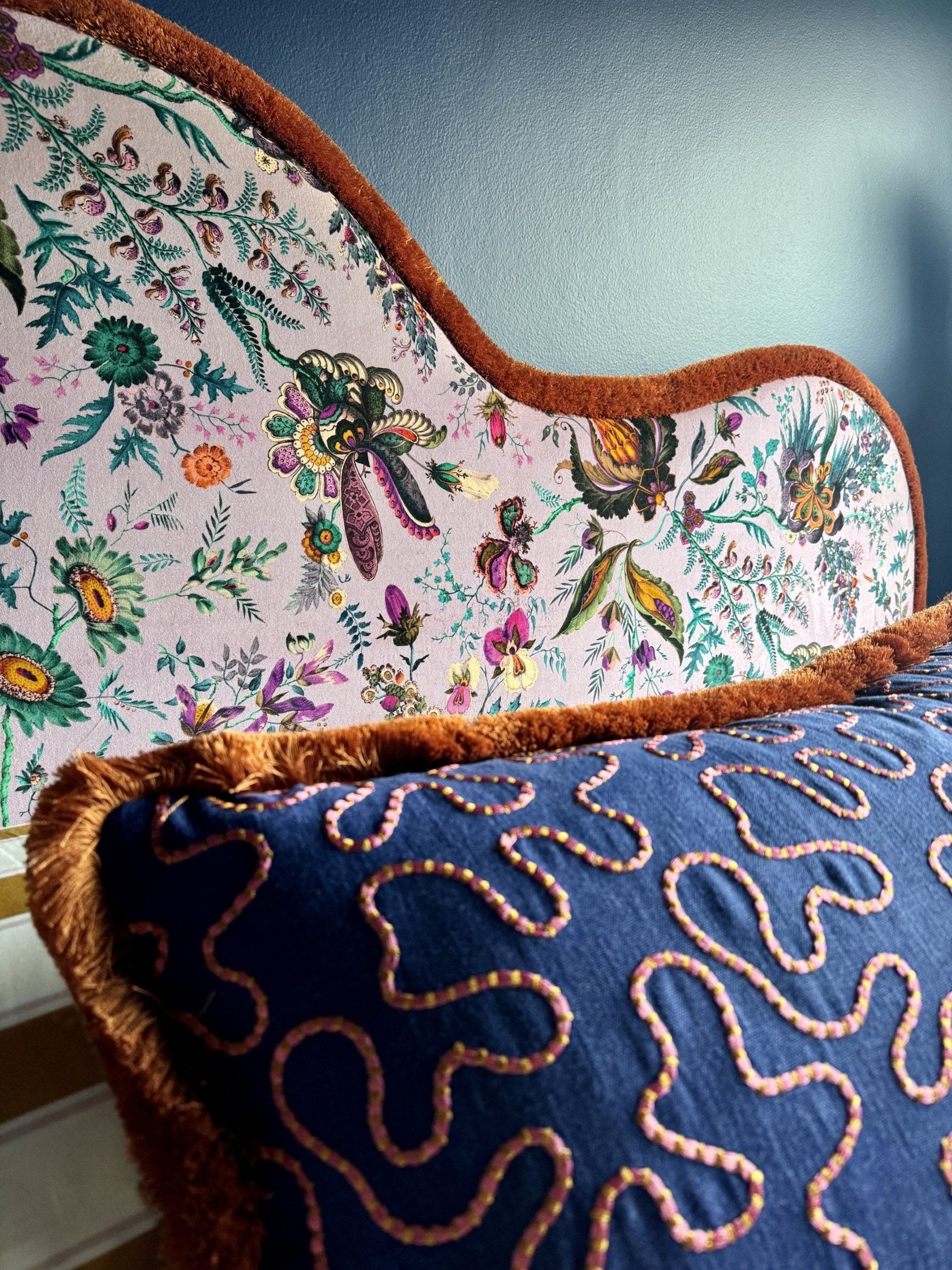

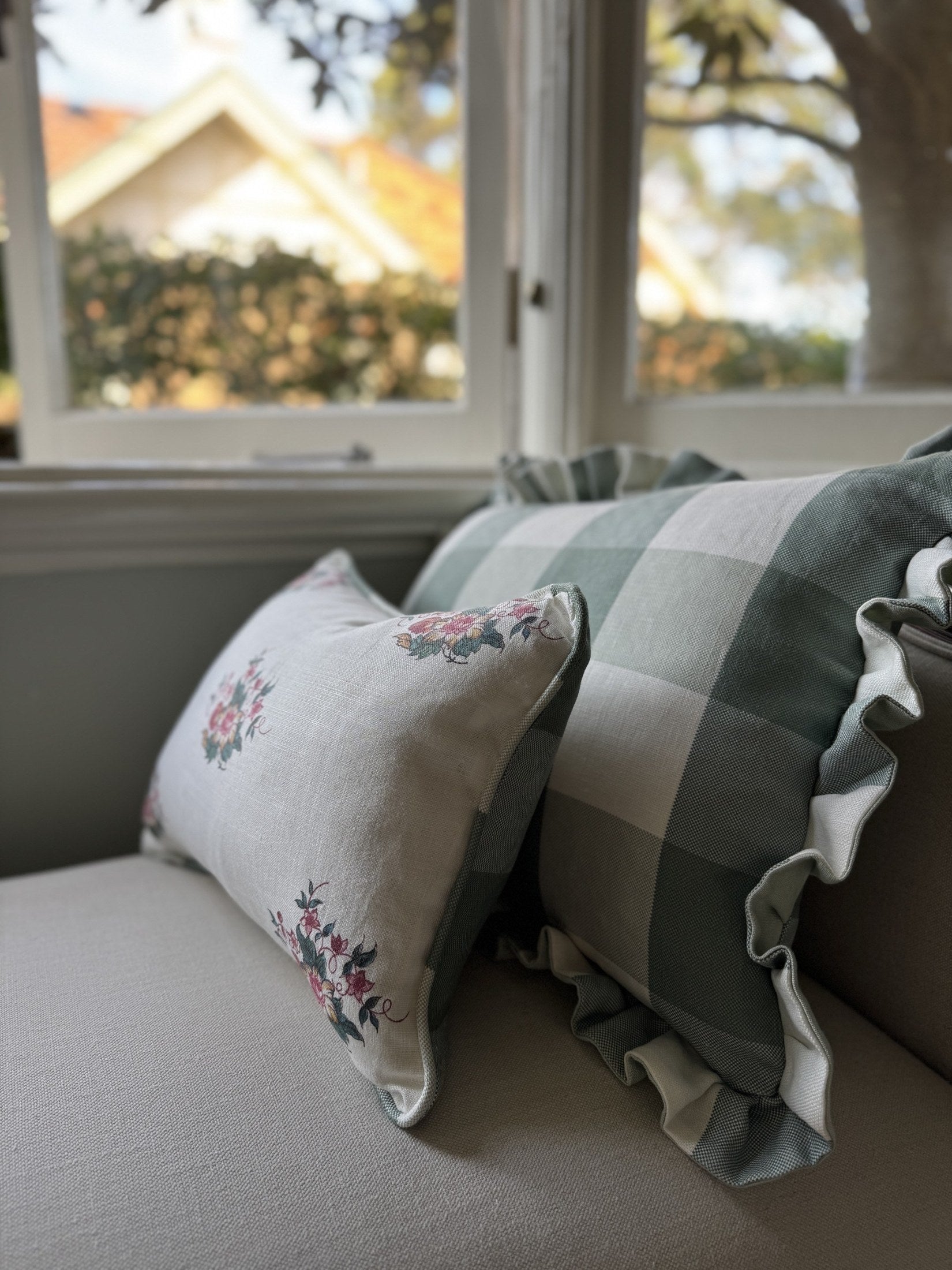
Think about what the cushion will encounter during a normal week. Is it mainly decorative, held while watching television or used behind someone reading? Do children bring snacks onto the sofa? Does a pet regularly settle in the same corner? Explain the actual routine rather than simply asking for a 'hard-wearing' fabric.
Feel the samples against your hand and forearm. A raised weave may be attractive but feel scratchy to someone who leans against it. A smooth fabric may be comfortable but show marks differently. Check the supplier's intended use and care instructions for the particular fabric; a curtain fabric is not automatically suitable for every cushion application.
Sun exposure is another part of the brief. Note whether direct sunlight reaches the furniture, at what time and for roughly how long. No decorative fabric should be assumed immune to fading. Discuss suitable choices and the role of window furnishings rather than relying on a broad claim such as 'coastal fabric'.
For a Northern Beaches home or a sunny Mosman room, the relevant issue is the actual indoor exposure, not the suburb alone. Cushions intended for a covered outdoor area require a separate discussion about fabric, filling, moisture and storage. Do not treat an indoor cushion as an outdoor product because its colours suit the terrace.
On a bed, decorative cushions need to relate to the width of the mattress, the height of the bedhead and the sleeping pillows. Start with the bedding you use most often. A simple arrangement that works with that bedding may be more useful than one designed around a special cover used occasionally.
Check how much of the bedhead remains visible once the pillows and cushions are in place. If the bedhead has a distinctive shape or pattern, leaving more of it exposed can help the room feel less crowded. Different cushion heights can create depth without adding a large number of pieces.
Decide where decorative cushions will be placed at night. A nearby chair is only a solution if it is not already needed for sitting or clothes. If storage is limited, reduce the number or choose shapes that can be put away easily.
When a bedhead is also part of your plans, consider the fabrics together rather than completing each order separately. Keep the proposal manageable: one pair of cushions and a smaller accent may be enough to test before adding anything else. That is a hypothetical starting point, not a record of a Tempo project.
Ask for care instructions for the finished cover and the insert separately. A fabric may have a particular cleaning method while a trim, lining or filling requires something different. Do not assume advice for one component applies to the whole cushion.
Discuss whether the cover is removable, how it should be cleaned and whether any professional cleaning is recommended. Keep the product information with the order details. If a spill occurs later, follow that guidance rather than experimenting with a household cleaner or a cleaning tip intended for another fibre.
Consider the effort you are willing to make between cleans. Some fillings need more frequent plumping, and some surface textures show handling more readily than others. These differences are not necessarily faults; they help determine whether a cushion suits your expectations.
If easy upkeep is a priority, state it before choosing a delicate fabric or elaborate trim. The best-looking sample is not always the best choice for the busiest seat in the house. A different construction or a simpler finish may give you more enjoyment in daily use.
The finished size, quantity, fabric choice, insert, reverse fabric and edge details all contribute. Fabric usage depends on more than the visible dimensions: pattern placement and matching can require additional cloth. Unusual shapes or intricate finishing can also change the work involved.
Ask whether the quotation includes both cover and insert. Confirm the chosen fabric references, number of cushions, dimensions, finish and any delivery or collection arrangements. A lower total may represent a different specification rather than the same cushion at a better price.
There is no reliable universal lead time to assume. Fabric availability and the making schedule need to be checked for the proposed order. If the cushions are intended for an event or a room being completed by a particular date, explain that at the start and ask what can be confirmed.
Where the budget is limited, compare a smaller, well-considered group with a larger arrangement. You may be able to retain comfortable inserts or use an existing cushion alongside new pieces, subject to condition and compatibility. Make those decisions before the order rather than reducing essential details after fabric has been selected.
You do not need to resolve every detail before seeking advice. A useful brief makes the open questions visible. Gather:
Then separate what is essential from what you would like to explore. You might be certain about retaining the sofa but undecided about colour. Or you may love one fabric while needing advice on size and quantity. This is more useful than arriving with a finished specification that has never been tested on the furniture.
Contact Tempo Interiors to discuss cushions and a coordinated soft-furnishing scheme. Bring your room photographs and questions to the Mosman studio by appointment. Current samples, making options, availability and any consultation fees can be confirmed for your brief before you commit.
Found this guide useful? Add Tempo Interiors as a preferred source on Google.
SHIPPING
At Tempo Interiors we offer two different types of delivery, determined by the products in your order to ensure a great delivery experience.
We use specialist furniture removalist companies for all larger furniture items. Homewares and accessories are sent by Fastway carrier, rugs are sent by Startrack. Please note that multiple product orders are charged according to the product with the highest delivery type.
HOW DOES THE DELIVERY PROCESS WORK FOR FURNITURE?
Once items are dispatched, our allocated Transport Company for your area will contact the preferred delivery contact provided via phone or text to arrange delivery. Upon approach the transport company will make contact approximately half an hour ahead of delivery taking place to ensure both parties are prepared. Once on location the delivery will take place.
Our Transport Companies will perform a white glove service on delivery. White glove entails a full unpack, assemble, product placement and rubbish removal. All steps are taken with care and pride to ensure that any damages are avoided. Please inspect all deliveries before signing to accept the order.
HOW DOES DELIVERY PROCESS WORK FOR HOMEWARES?
Once dispatched from our supplier the carrier will deliver your order to your specified delivery address during business hours and orders must be signed for. Please ensure your delivery address is available during business hours.
HOW LONG FROM PLACEMENT OF ORDER ARE GOODS PICKED AND DISPATCHED?
Once the order has been paid, confirmed and processed We will pick and pack items within 48 hours of placement of order.
Orders are dispatched depending on the location.
CAN I PICK UP FROM The WAREHOUSE?
Yes, if you prefer to pick up items, please ensure to make prior arrangements with either the warehouse or your sales consultant.
WHAT IS ‘WHITE GLOVE’ DELIVERY?
All furniture orders come with our premium white glove service which includes full unpack of your goods, assembly, product placement and rubbish removal.
FREE FREIGHT
Tempo Interiors offer free freight on orders (metro deliveries) of $5,000 and above and capped freight at $170 on orders below $5,000 This is inclusive of GST. Metro covers deliveries to all suburbs within a 30 Kilometer radius of Brisbane, Sydney and Melbourne cities. All deliveries outside the metro area require a quote from Tempo Interiors.
HOW IS FREIGHT CALCULATED?
Freight is determined on several different aspects, these include size, location and frangibility. It is important to remember that freight is quoted based on ground level access, Deliveries into high rise units or access via stairs and lifts are considered an additional service and may incur further charges that will alter the freight quote.
TO AVOID ANY ADDITIONAL CHARGES, IT IS IMPORTANT TO ASK YOURSELF THE FOLLOWING QUESTIONS:
WHAT TO DO WHEN THE TRANSPORT COMPANY ARRIVES?
It’s very important that once the product has arrived that you thoroughly check items prior to signing for it. Any damages that may be found need to be reported on the spot and the transport company will return order for Tempo Interiors to revise.
During the quality control process the warehouse team insert a card into every box, that card will provide all necessary steps to undertake if stock arrives damage.
Please note all items must be personally inspected upon unpacking, as once the delivery is signed for claim of damage and faults may not be accepted by the carrier.
WHAT HAPPENS IF DELIVERY DOESN'T ARRIVE?
In the rare event that your delivery doesn’t arrive please contact Customer Care on 02 9960 2844, they will then track down order and resolve accordingly.
WHAT HAPPENS IF MY PRODUCT ARRIVES BROKEN?
During the quality control process the warehouse team insert a card into every box, that card will provide all necessary steps to undertake if stock arrives damage.
Please note all items must be personally inspected upon unpacking, as once the delivery is signed for claim of damage and faults may not be accepted by the carrier.
Please contact Customer Care on 02 9960 2844 for all further information.
DELIVERY TIMELINES
FURNITURE | Hunter & Co & Aussie Home Removals
Sydney Metro 2 Weeks
FURNITURE | INBOX
Melbourne Metro 2-3 Weeks
FURNITURE | Swift or DJ Lindsay
Brisbane & Gold Coast Metro 1-2 Weeks
FURNITURE | Anything and everything
Sunshine Coast Region 1-2 Weeks
FURNITURE | Pedemonts Transport
Adelaide Metro 3+ Weeks
Perth Metro 4+ Weeks
Please Note: All Regional areas require a Quote for all carriers. Contact your sales consultant for more information.
HOMEWARES | Partner Carrier Fastway or Startrack
Brisbane 1-3 Business Days
Sydney 1-4 Business Days
Melbourne 3-5 Business Days
Adelaide 3-6 Business Days
Perth 4-7 Business Days


